

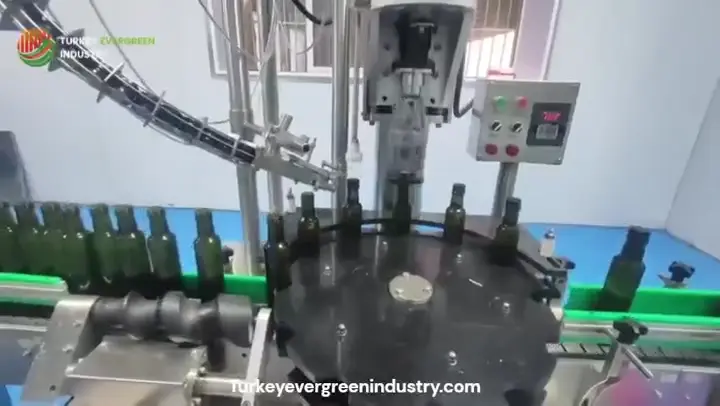
Bottling your own olive oil lets you sell under your brand instead of in bulk. An automatic filling and capping line makes the process faster and more consistent, and reduces manual handling. Here is what such a line includes and how to plan it.
The stations of an olive oil filling and capping line
A typical olive oil bottling line includes:
- Automatic bottle conveyor that moves bottles continuously between stations.
- Filling machine with several dosing heads for accurate filling.
- Cap feeding and positioning that places caps on the bottles.
- Automatic capping machine, often with a rotary transfer table, that closes and tightens the caps.
- Electrical control system to run and monitor the line.
Labelling, coding and case packing can be added after capping as your volumes grow.
Plan around your bottles
Bottle shape and size drive most machine choices: conveyor guides, filling nozzles, cap type and capping heads. Decide your main formats early, for example 250 ml, 500 ml, 750 ml and 1 litre, and send sample bottles and caps to your supplier for testing.
Layout and utilities
- Keep a straight, logical flow from empty bottles to finished cases.
- Leave space for operators to load bottles and caps and to reach every machine.
- Check power supply and compressed air requirements before installation.
- Plan storage for oil tanks, empty glass and finished goods near the line.
Beyond olive oil
The same line can usually fill other edible liquids such as sunflower oil, vinegar or sauces, provided the viscosity and containers are compatible with the dosing system. Mention all products you plan to bottle during the study.
Test before shipping
Ask for a test run with your oil, bottles and caps at the factory before the line ships. It confirms filling accuracy and capping torque, and avoids surprises on your site.
Planning a project? Tell us what you want to produce and we will reply with a first study plan, or message us on WhatsApp.