Choosing a forklift is mostly about where it will work and how many hours a day. Electric forklifts have become the default choice for warehouses and food factories, while diesel still has a place in heavy outdoor work. Here is how they compare on the points that matter.
Where the forklift works
Electric forklifts produce no exhaust, so they can work indoors, in food plants and in closed warehouses without ventilation concerns. They are also much quieter, which helps operators communicate and reduces fatigue. Diesel forklifts are better suited to rough yards and long outdoor shifts where charging is not practical.
Running and maintenance costs
An electric drive has far fewer moving parts than a diesel engine: no oil changes, fuel filters, injectors or exhaust system. Energy costs per hour are generally lower than fuel, although this depends on local electricity and diesel prices. The main item to plan for is the battery: how many shifts you run, and whether you charge between shifts.
Capacity and lift height
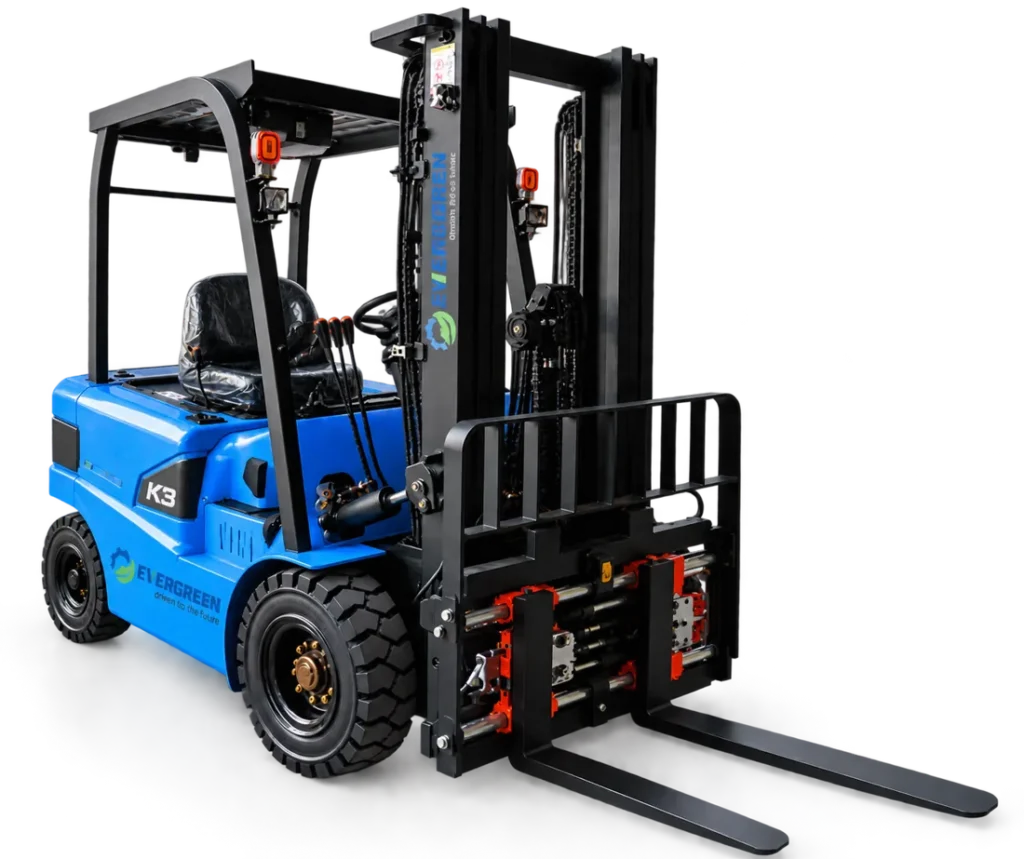
Modern electric forklifts cover the loads most businesses handle. Evergreen electric forklifts, for example, come in 1.5, 2.5 and 3 tonne versions, all with a maximum lift height of 4,500 mm. For very heavy loads or extreme terrain, diesel models remain more common.
Safety and control
Look at the features that reduce accidents and misuse:
- Access control: starting with an RFID card limits use to trained operators.
- Visibility: front and rear cameras help when the load blocks the view.
- Hydraulic controls: four levers allow precise lifting, tilting and attachment control.
Attachments for agriculture
For olive farms and mills, a hydraulic rotator lets the forklift lift and tip olive bins directly into hoppers. On the Evergreen 3 tonne model this rotator is an option, and the forklift still accepts standard forks when the rotator is not needed.
Quick checklist
- Mostly indoor or food-grade areas: choose electric.
- Single or double shift with time to charge: electric is usually cheaper to run.
- Rough terrain and very long outdoor shifts: consider diesel.
- Olive handling: check for a bin rotator option.
Planning a project? Tell us what you want to produce and we will reply with a first study plan, or message us on WhatsApp.