A turnkey project means one partner takes your idea from a feasibility study to a production line that runs, and hands you the keys. For a first factory, or a new product line in an existing plant, this approach removes the hardest part of industrial projects: coordinating many suppliers who each answer for only one piece.
Here is how a turnkey food production project usually unfolds, and what you should prepare at each stage.
1. Study: start with the product, not the machine
The study defines what the line must do. It answers practical questions before any money is spent on equipment:
- Product: what exactly will you produce, in which formats and pack sizes?
- Capacity: how many kilograms per hour, bags per minute or jars per day do you need now, and in three years?
- Site: what floor space, ceiling height, power supply and water do you have?
- Market: who buys the product, and which certifications or labelling rules apply?
- Budget and payback: what investment is realistic, and how quickly should it pay back?
A good study often changes the project for the better: a smaller first line with room to grow, or a different pack format that is cheaper to fill.
2. Design: see the plant before you pay for it
Engineers then lay out the full line: the order of the machines, the product flow, conveyors, operator access, and utilities such as electricity, compressed air and water. A 3D layout lets you check the flow, spot bottlenecks and plan the building before anything is ordered. The output of this stage is a machine list and a detailed quotation.
3. Machines: standard where possible, custom where needed
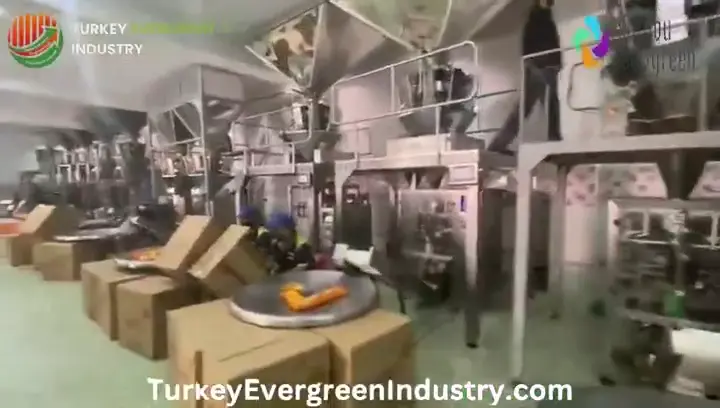
Most lines combine proven standard machines, such as multihead weighers, filling and capping machines or powder packers, with custom equipment where your product requires it. Insist on a factory acceptance test with your own product before shipping. Problems found at the factory are cheap to fix; problems found on your site cost weeks.
4. Installation and commissioning
The supplier’s team installs the machines, connects utilities, and runs the line until it reaches the agreed output. This stage also includes training for operators and maintenance staff. Ask for the commissioning criteria in writing: output rate, accuracy and reject rate.
5. Handover and support
At handover you receive the running line, documentation, spare parts and a support plan. The first months of production are when questions come up, so a partner that stays available matters as much as the machines themselves.
Common mistakes to avoid
- Choosing machines before defining the product and capacity.
- Planning the building after ordering equipment.
- Skipping the factory acceptance test to save time.
- Buying from several suppliers with no single party responsible for the whole line.
At Turkey Evergreen Industry we run all five stages with one team, from our offices in Istanbul and Sfax and our engineering base in Suzhou. See projects we have delivered.
Planning a project? Tell us what you want to produce and we will reply with a first study plan, or message us on WhatsApp.